
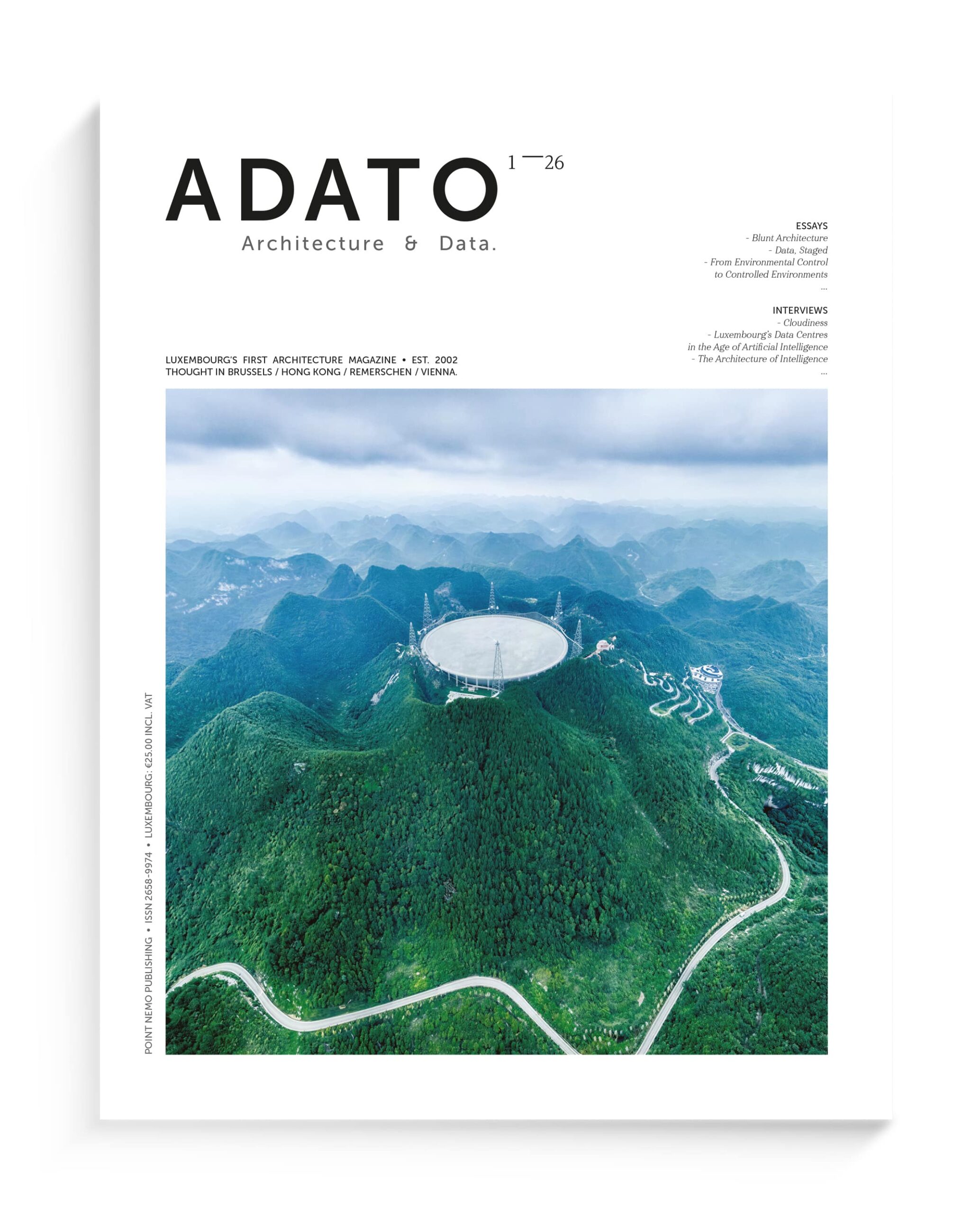
25€
Thématiques
ADATO #1_2026 DATA
Digitalization appears immaterial – as a promise of salvation under the banner of the “Green Deal,” sustainable and future-oriented. Yet it is based on a massive, highly specialized built infrastructure: data centers, server farms, fiber-optic networks, cooling systems, and security architectures. Behind the seemingly limitless cloud, hermetic buildings emerge that organize energy, data, and control. The issue “Architecture &Data” examines these new typologies between invisibility and territoriality and asks how architecture changes when it is no longer built primarily for human use, but for storage, algorithms, and permanent availability.
Luxembourg has strategically positioned itself as a European data and cloud location and is investing specifically in digital sovereignty. Behind this immaterial promise, a highly concentrated physical infrastructure is taking shape: data centers in industrial zones, secured perimeters, redundant energy and fiber-optic networks. The Luxembourg focus examines these architectures as built manifestations of a national digital strategy and asks how a small state territorially anchors global data flows. How visible may or should this infrastructure be? What architectural language do buildings develop that must guarantee maximum security, permanent availability, and international connectivity? Luxembourg is considered here asa model case of a nation increasingly materializing its economic future in concrete, cooling systems, and backup infrastructures.
Luxembourg has strategically positioned itself as a European data and cloud location and is investing specifically in digital sovereignty. Behind this immaterial promise, a highly concentrated physical infrastructure is taking shape: data centers in industrial zones, secured perimeters, redundant energy and fiber-optic networks. The Luxembourg focus examines these architectures as built manifestations of a national digital strategy and asks how a small state territorially anchors global data flows. How visible may or should this infrastructure be? What architectural language do buildings develop that must guarantee maximum security, permanent availability, and international connectivity? Luxembourg is considered here asa model case of a nation increasingly materializing its economic future in concrete, cooling systems, and backup infrastructures.
Où acheter ?
À voir également
-

Marie
Point Nemo Publishing -
LAA - Luxembourg Architecture Award
Point Nemo Publishing -

Le Goût de l'ailleurs
Capybarabooks -
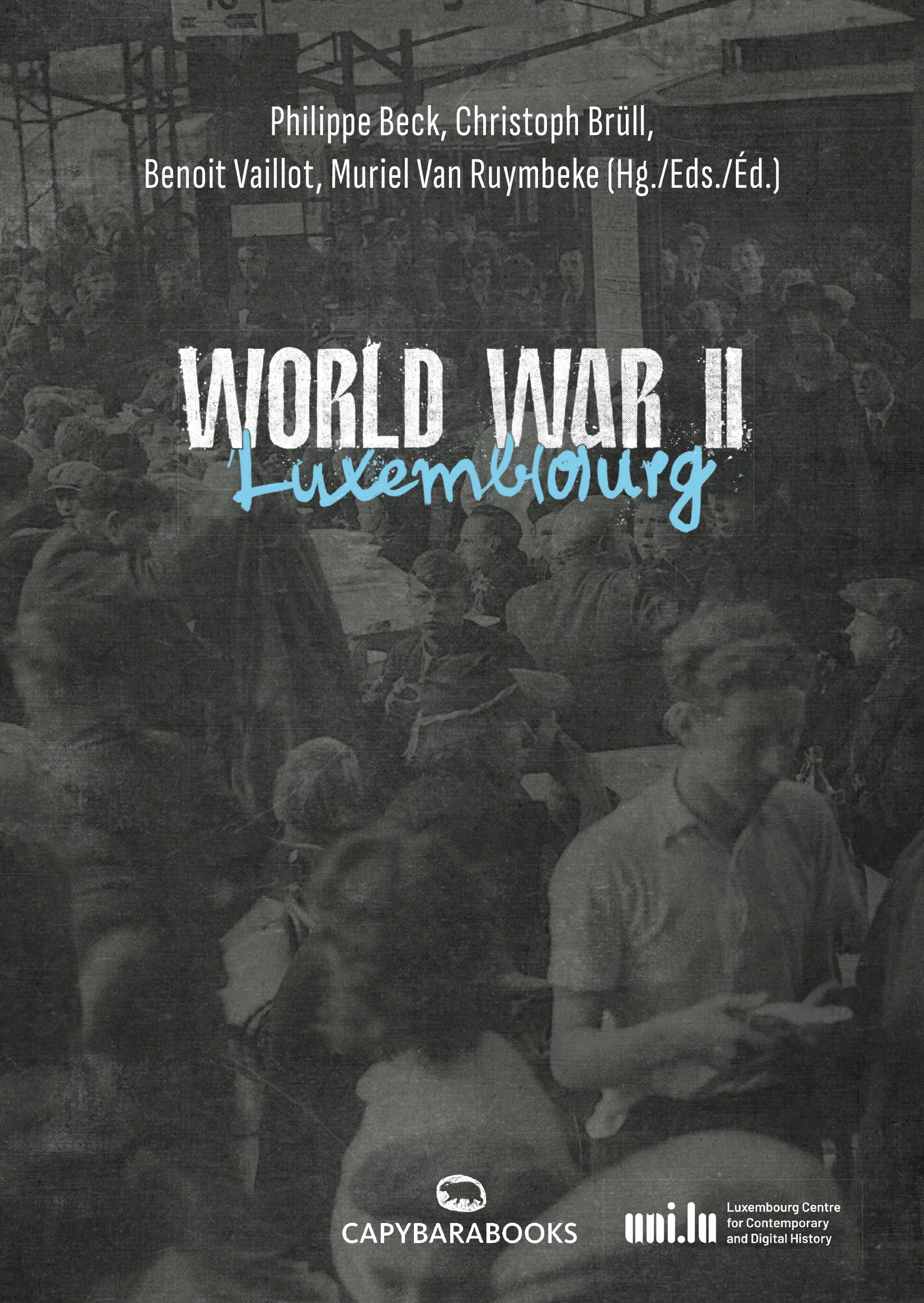
WORLD WAR II. Luxemb(0)urg im Zweiten Weltkrieg
Capybarabooks -

Il était une fois le Luxembourg
Baobab Luxembourg Sàrl -

Et wor emol zu Lëtzebuerg
Baobab Luxembourg Sàrl